
Beyond Novelty
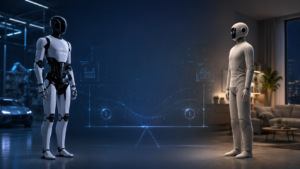
When Sony released the original AIBO in 1999, it was a fascinating but expensive novelty. Fast forward to 2026, and AI companion robots have evolved into genuinely useful household members. Modern companions combine natural language processing, emotional recognition, and adaptive learning to create meaningful interactions with their owners.
Who Is Using AI Companions?
Elderly Care
One of the most impactful applications is elderly companionship. Studies have shown that social isolation in older adults is associated with a range of health risks. AI companions like ElliQ and newer models provide daily conversation, medication reminders, video calling assistance, and cognitive stimulation through games and activities.
Importantly, these robots are designed to supplement human care, not replace it. They fill the gaps between caregiver visits and provide consistent, patient interaction without judgement.
Children and Education
For children, AI companions serve as both entertainment and education tools. Robots like Moxie and Embodied’s lineup are designed to help children develop social and emotional skills through guided conversations, storytelling, and interactive play. They adapt their difficulty level based on the child’s age and progress.
Mental Health Support
While no robot replaces a qualified therapist, AI companions are being explored as supplementary tools for mental health. Some models offer guided breathing exercises, mood tracking, and cognitive behavioural therapy-inspired conversations. The non-judgemental, always-available nature of these robots makes them appealing for daily check-ins.
The Technology Behind the Connection
What makes modern AI companions feel “real” is the convergence of several technologies. Large language models enable natural, context-aware conversation. Computer vision allows the robot to recognise faces, interpret expressions, and respond to body language. Reinforcement learning helps the robot adapt its personality to each user over time.
The result is an interaction that feels less like talking to a device and more like engaging with a character that knows you.
Privacy and Ethical Considerations
AI companions raise legitimate privacy concerns. These robots often have cameras and microphones that are always on, processing data in your home. Reputable manufacturers process data on-device where possible and encrypt cloud communications, but it is worth reviewing each product’s privacy policy carefully.
There are also broader questions about emotional attachment to machines and the potential for these relationships to substitute for human connection. The consensus among researchers is that AI companions work best as a bridge, not a replacement, for human relationships.
Looking Ahead
The AI companion market is projected to grow significantly as the technology becomes more sophisticated and prices decrease. Expect future models to have better mobility, longer battery life, and deeper personalisation capabilities. The line between gadget and genuine companion continues to blur.